Holding Onto The Original Spark: A Conversation with Nellie Robinson (BRDD 2017)
Continuum: Life After the BRDD
This editorial is part of an ongoing alumni spotlight series celebrating the breadth and depth of the Brown|RISD Dual Degree community by following a thread of ideas, practices, and collaborations that trace how alumni across generations and geographies think and work at the intersections, carrying forward the program’s ethos of curiosity and multidisciplinarity long after graduation.
Nellie Robinson (BRDD 2017, Illustration; Computer Science) codes and paints, and is currently a Technical Director at Disney, helping design interfaces between artists and software engineers. On the side, she makes plein air gouache paintings and sketches. In conversation with two recent Dual Degree alumni, Nellie elaborates on finding her way to animation, resisting an engineered path, balancing technical and creative sensibilities, and “holding onto the original spark” that made her want to create in the first place.
Nellie called in from Los Angeles, CA, USA; Yukti V. Agarwal (BRDD 2024.5) from Delhi, India; and Mehek Gopi Vohra (BRDD 2024) from San Francisco, CA, USA.
This interview has been edited for length and clarity.
After majoring in Illustration, how did you find yourself working in animation?
Halfway through the dual degree program, eight Dualies and I proposed our own Wintersession course that offered space for us to experiment and figure out how our majors spoke to each other. During the course I made a series of illustrations that used Processing [a creative-coding programming language], a Blender add-on I wrote, and hand-drawn work, which I sent to Pixar as part of an internship application – and I ended up getting it!
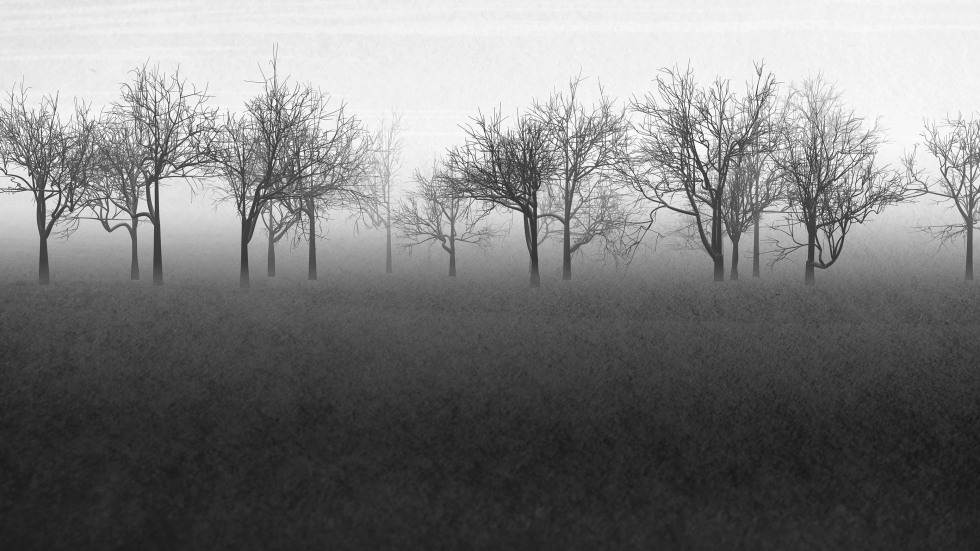
Tree study created during 2015 Wintersession course
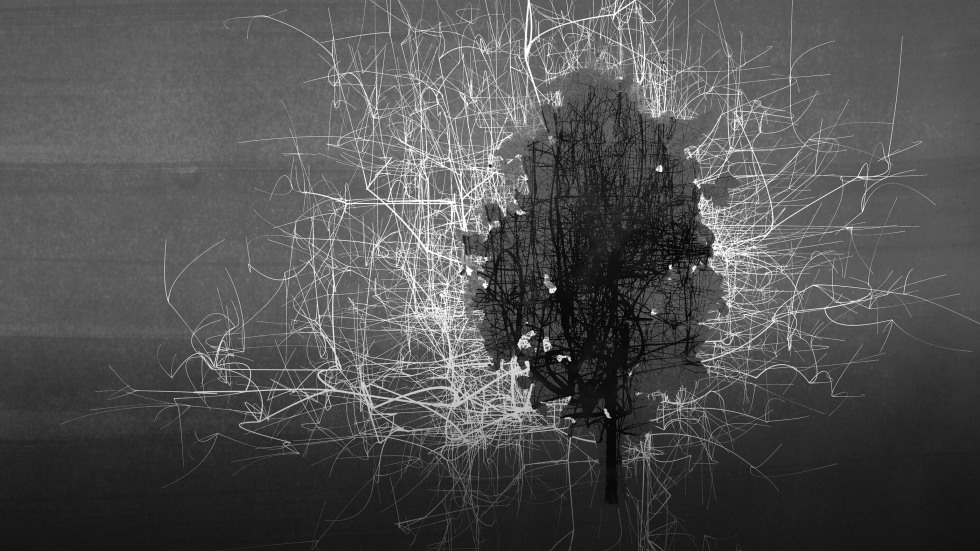
Tree study created during 2015 Wintersession course
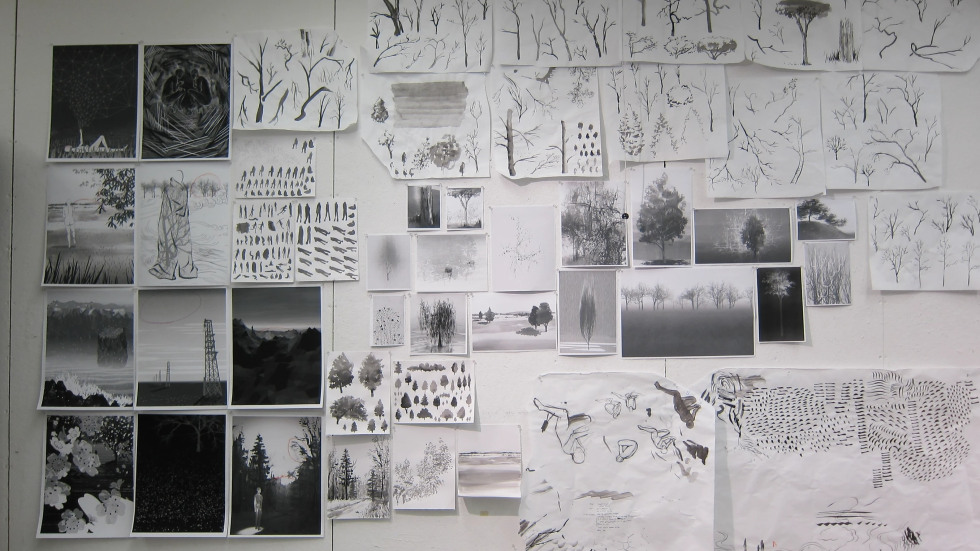
Sketches generated during 2015 Wintersession course
I loved interning at Pixar. At the time, I wasn’t totally sure what direction I wanted to go in, but the experience made it clear that I wanted to work in animation. The way I think about art felt aligned with how computer animation works – it’s more procedural and programmatic, which is different from how many illustrators or artists tend to approach their work. That really clicked for me.
After that, I wasn’t sure whether I wanted to pursue animation as an artist or in another role. My first job ended up being in VFX [visual effects] as a technical director at a very small studio, where I ended up doing a little bit of everything. I realized how much I loved being a technical director, and decided to keep going in that direction and eventually transition fully into animation.
“ Translating artists’ needs into something engineers can understand can feel abstract – but at its core, it’s about communication and problem-solving. ”
What does it mean to be a technical director?
At Disney, artists use a range of specialized software, and technical directors step in when something slows them down or breaks their process. If an artist runs into a bottleneck, we might build a small tool, write a quick script, or find a workaround to get them moving again.
We’re not software engineers – we’re not building large-scale systems or core software. Instead, our work is more immediate and responsive: quick, sometimes scrappy solutions that make an artist’s day easier and keep production moving.
Understanding artists’ workflows makes a real difference, and that’s something my time at RISD helped with. Learning new materials, working through open-ended assignments, and adapting to loosely-defined prompts all trained me to think flexibly and meet artists where they are. Translating artists’ needs into something engineers can understand can feel abstract – but at its core, it’s about communication and problem-solving.
Where do you find your inspiration?
I’ve been inspired by projects like Spider-Verse, which are pushing both what animation can look like and who it’s for. There’s a growing excitement around non-photorealistic, highly-stylized animation, and that feels like an important shift.
What excites me most right now is the emphasis on animation that feels intentional and handmade – work where you can tell that a lot of thought and care went into every choice. That kind of stylization is something AI struggles to replicate, and it opens up a lot of space for animation that feels distinct, expressive, and human, rather than polished into sameness.
Do you ever think about the broader impact of the tools and films you help create?
It’s not something I think about on a day-to-day basis. But when a movie comes out and we start hearing from fans, it does hit you. You realize people [have been] waiting for this film, that they might watch it more than once, and that it could leave a lasting impression. That’s a pretty special feeling.
I had a few experiences like that myself growing up. I still clearly remember watching Fantasia for the first time and feeling completely in awe. Even though it doesn’t have a traditional narrative, it was all about mood, music, and imagery. It’s meaningful to remember that the work we do might create moments like that for someone else.
“ I value the balance between the collaborative, technical work I do and the art I make for myself – there’s something really important about making work just for yourself. ”
What advice would you give to current dual degree students who are trying to figure out how – or whether – to combine their majors?
I’d say follow what feels genuinely fun, rather than trying to optimize for a specific career or force your majors into a cohesive plan. When I started, I actually had completely different majors in mind – I was considering Painting and Art History and imagined working in a museum.
There were moments when I tried to actively combine Computer Science and Illustration, but I’m glad I didn’t force a single, engineered path. I value the balance between the collaborative, technical work I do and the art I make for myself. There’s something really important about making work just for yourself – it’s easier to hold onto the original spark that made you want to create in the first place.
What’s your favorite museum in Los Angeles?
The Museum of Jurassic Technology. It’s the most unique museum I’ve ever been to – and I still don’t fully understand it, which is what makes it great. It doesn’t feel like a traditional museum at all. It’s more like walking through a house filled with strange stuff. The exhibits are strange and fascinating; things like folk remedies or old wives’ tales, paired with research that explains why they might actually work.
And a great movie you’ve seen recently?
Recently I watched Tokyo Godfathers. The animation is beautiful – fully hand-drawn, with incredibly detailed backgrounds. The film follows three people who find a baby on Christmas and try to return it to its family. I’m especially drawn to stories that are a series of coincidences and events that lead from one to another, and where there’s a mystery throughout that slowly unravels.
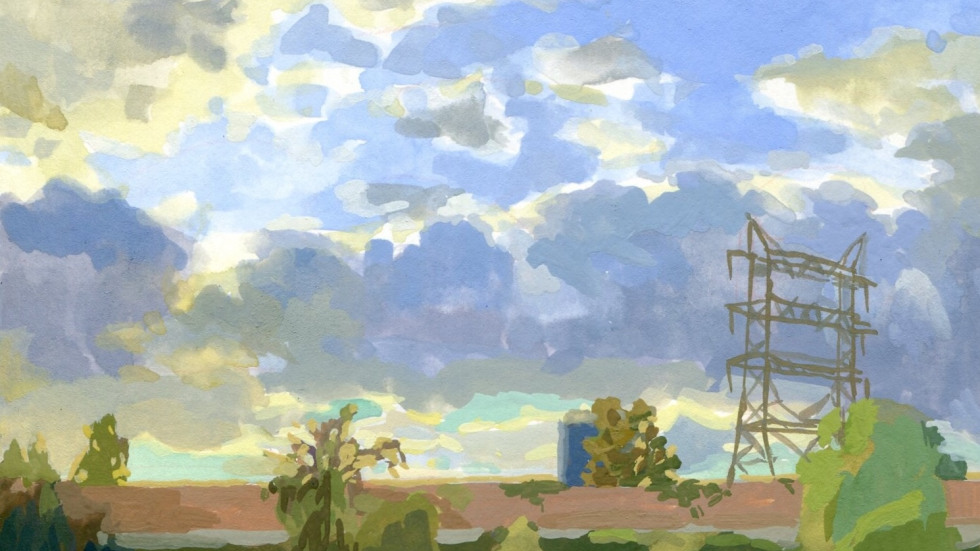
"View from Buena Vista Park," gouache, 6 x 4 inches

"North Hollywood Park," gouache, 6 x 4 inches

Gouache study of Brown campus