Not Just One Thing: A Conversation with Dora Mugerwa (BRDD 2015)
Continuum: Life After the BRDD
This editorial is part of an ongoing alumni spotlight series celebrating the breadth and depth of the Brown|RISD Dual Degree community by following a thread of ideas, practices, and collaborations that trace how alumni across generations and geographies think and work at the intersections, carrying forward the program’s ethos of curiosity and multidisciplinarity long after graduation.
Dora Mugerwa (BRDD 2015, Furniture Design; Environmental Science) is an emerging professional in landscape architecture, among other things. At Brown and RISD, Dora studied environmental science and furniture design, and currently works as a Designer at Boston's Klopfer Martin Design Group (KMDG). She approaches her creative practice as a space for relationship – between people, land, materials, language, history. In conversation with two recent Dual Degree alumni, she reflects on how this way of seeing informs her interdisciplinary practice, and why being “not just one thing” is a conscious choice.
Dora called in from Boston, MA, USA; Yukti V. Agarwal (BRDD 2024.5) from Fort Kochi, Kerala, India; and Mehek Gopi Vohra (BRDD 2024) from San Francisco, CA, USA.
This interview has been edited for length and clarity.
Why did you want to be a landscape architect?
I didn’t start out knowing I wanted to be a landscape architect. After finishing the Dual Degree program, I took classes in graphic design, photography, interior design, textiles, and realized that I wanted a creative core without losing my multiple creative pursuits and interests. I found myself drawn to the built environment – but not architecture in the traditional sense. Landscape architecture felt more sculptural, spatial, and large-scale. It has space for creativity, but there are real constraints – people, infrastructure, ecology, budgets. I think of it as a center: the trunk that holds everything else. My interests could all exist within it, without needing to collapse into a single way of working.
“ I wanted a creative core without losing my multiple creative pursuits and interests. ”
What informs your landscape design practice?
My multicultural background made me realize that my perspective is not the only one that matters. My family is from Uganda, where the relationship to land isn’t the same as in Western contexts. I was born in Sweden and grew up with many first-generation Swedish citizens, which made me naturally interested in understanding where people are coming from. That carries into my practice. I always ask: who is using this space – what do they want, need, value?
Even within my practice I don’t just consider myself to be a landscape designer. I’m an artist, a researcher, a collaborator, a listener. I wear many hats because the work requires it – and because that’s how I see the world. And that’s exactly how I exist culturally as well – I’m not just one thing.
“ Even within my practice I don’t just consider myself to be a landscape designer. I’m an artist, a researcher, a collaborator, a listener. ”
Before we go further, what is landscape architecture?
To put it simply, an architect designs the building, and a landscape architect designs the surroundings. That can mean gardens, paths, driveways, and also includes parks, plazas, playgrounds, memorials, riverfronts, stormwater management systems, streetscapes, and more. For example, Central Park in New York City and the Vietnam Veterans Memorial in D.C. were both designed by landscape architects. It’s a very broad field, and different firms specialize in different aspects of the profession such as remediation, public landscapes, or residential work.
Can you give us an example of a project you’ve worked on?
KMDG does a variety of projects, focusing mainly on public and institutional sites and working closely with communities to design new landscapes. One of my favorite projects – which I saw through from schematic design to feasibility report – was a small, backyard-scale community space. It was exciting because of the people involved. Projects at that scale aren’t very common in landscape architecture, and it felt special to be part of something serving a community that doesn’t usually receive that kind of support.
Before that, you studied at the Graduate School of Design at Harvard – how did that experience shape your approach to practice?
Harvard gave me time and space to do research in a meaningful way, because I entered knowing what I wanted to get out of it. Having a foundation meant I didn’t start from scratch, and I had the freedom to think more conceptually. I received funding from the Penny White Project Fund to research how language influences landscape, which helped me develop a more critical perspective. But, by that point, my sense of self was strong, and the work felt like an extension of how I was already thinking rather than something entirely new.
“ The dual degree experience really was the foundation. ”
How did your time in the dual degree program shape your approach?
Unlike many others, I intentionally kept my two degrees separate. People would ask me, “Are you doing sustainable design?” or “Are you doing environmental design?” While those connections made sense, I didn’t choose Furniture and Environmental Science because I wanted them to neatly come together. I wanted to focus on them separately. Furniture is very object- and maker-based. You’re using your hands, thinking about materials and how things feel, look, and come together. Environmental science is larger-scale and more ecosystem-based. It’s about relationships – systems, interactions, and context.
After graduation, I started asking questions like: How does culture influence the way we make? How does culture shape our relationship to land? Looking back, the dual degree experience really was the foundation. These questions – of material, making, texture, community, diversity – carried into my practice more than I realized.
Do you have any advice for students in the dual degree program?
Observe yourself. In the program, it’s easy to get overwhelmed and just follow a path without really paying attention to why you’re doing certain things. Keeping an academic and career diary helped me – what I was involved in, what I was making, what excited me. Using it as a checkpoint once a semester made patterns visible. That reflection helped me understand what I was building.
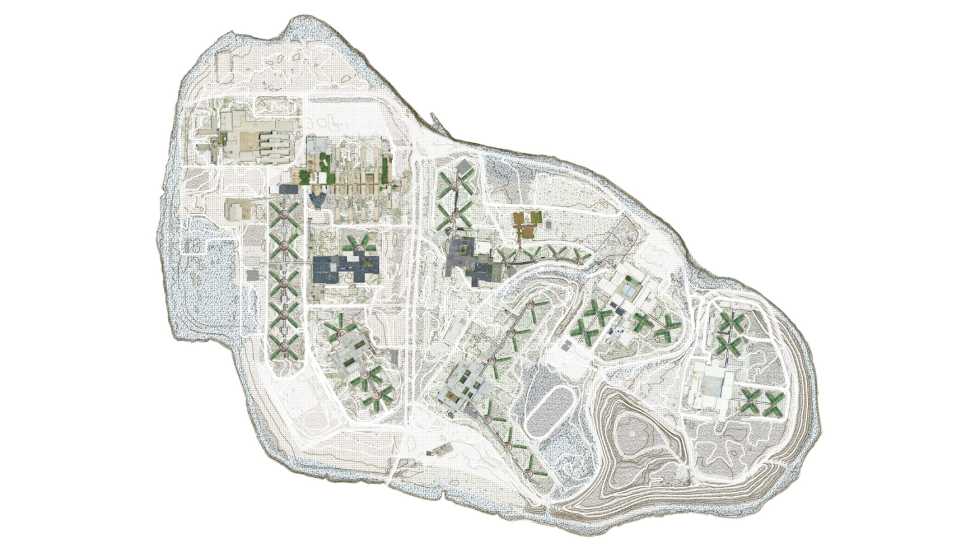
Botanics of Incarceration: A Site of Creative Justice, Rikers Island. Image courtesy of Dora Mugerwa
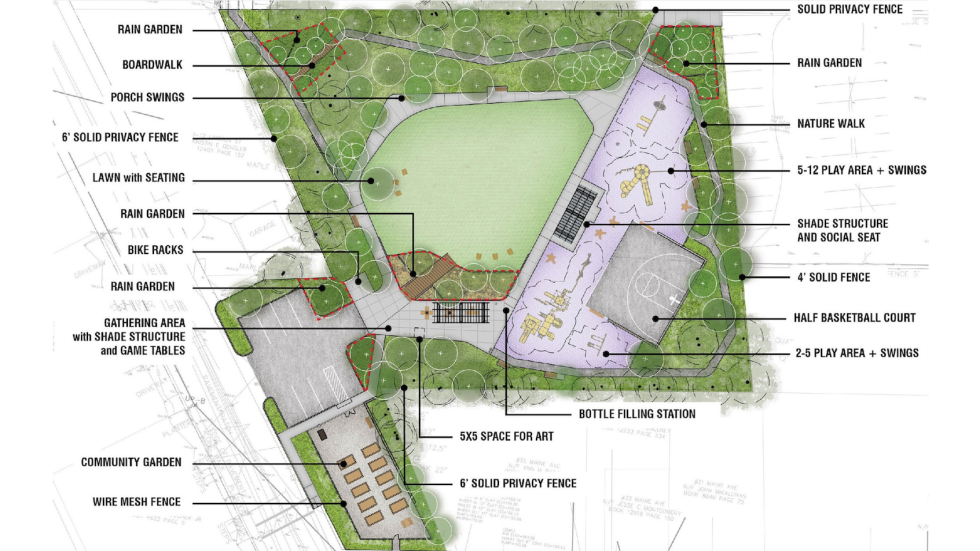
City of Easthampton, MA, New City Infrastructure Improvements - Lincoln Street Parcel Park Final Design. Credit Klopfer Martin Design Group - Drawn by Dora Mugerwa & Hana Ketterer, rendered by Dora Mugerwa
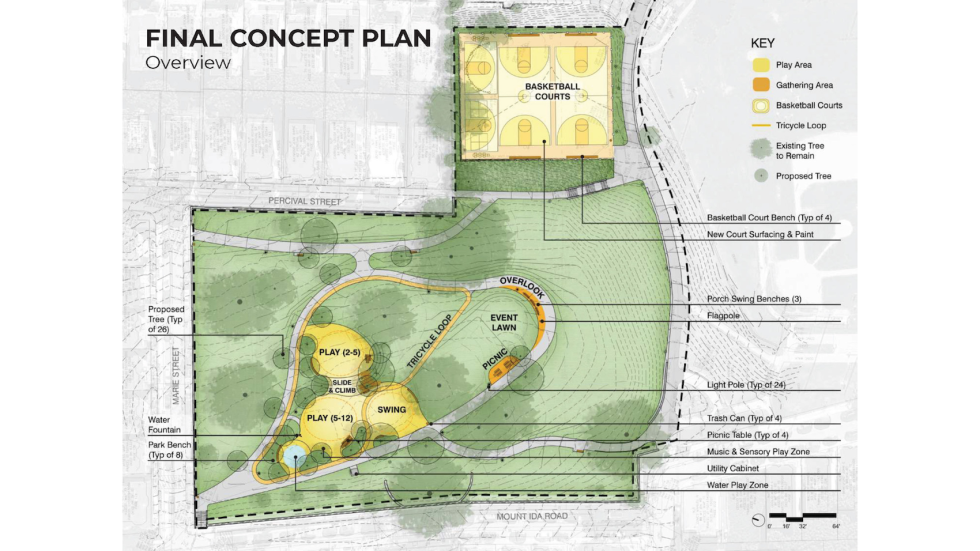
Render of Final Concept Design Plan for Improvements to Upper Ronan Park in Dorchester, Boston, MA - Credit to Klopfer Martin Design Group - Drawn and rendered by Dora Mugerwa & Melita Schmeckpeper